

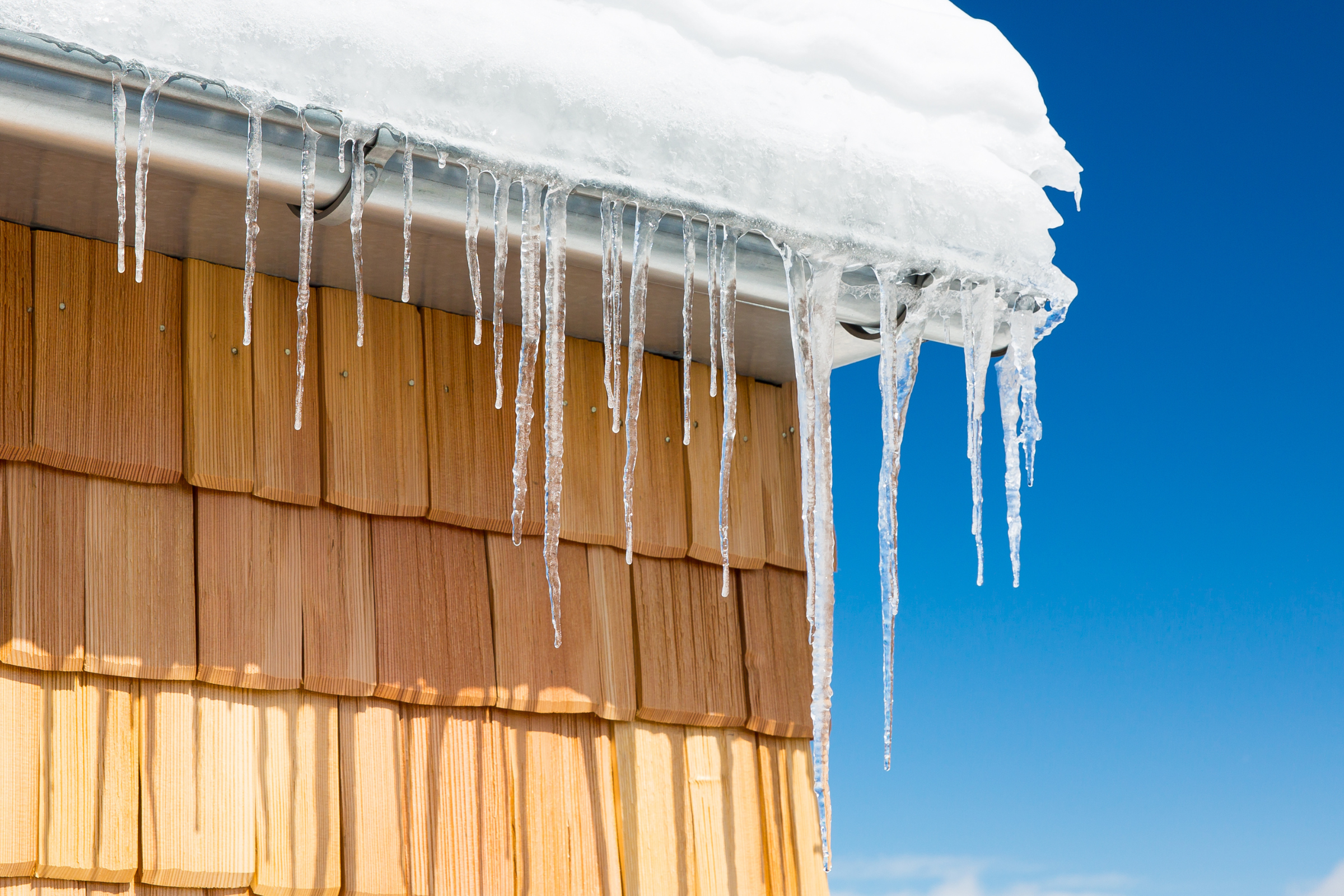
An ice dam is a ridge of ice along the bottom edge of a roof that traps melting snow behind it. It starts with heat escaping from the house, not with the gutters. Warmth leaking into the attic melts snow on the upper roof, the water runs down to the cold overhang, and it freezes again. Clogged gutters give that ice a head start, but the lasting fix is up in the attic. If an ice dam has already formed, stay off the roof and don’t chip at it. Steam clears the ice without breaking shingles or bending the gutter.
How an Ice Dam Forms
According to University of Minnesota Extension, an ice dam needs three things at once: snow on the roof, an upper roof surface above 32°F and a lower roof edge below it. Snow melts where the roof is warm, the water runs down, and it refreezes when it reaches the cold edge. Every thaw feeds the ridge a little more.
The warmth almost always comes from inside the house. Warm air slips into the attic around recessed lights, ducts, plumbing vents, chimneys and the attic hatch, and thin insulation lets even more through. Bathroom and kitchen fans that vent just above the roof can melt a patch of snow on their own. The overhang sticks out past the walls, so it stays as cold as the air outside.
Hudson Valley winters are built for this. A nor’easter drops a foot of wet, heavy snow, a sunny afternoon softens it, and the temperature drops hard after dark. A week of that and the eaves on a house in Poughkeepsie or Kingston can carry a thick band of ice, while the neighbor’s roof looks fine. The difference is usually in the attic.
Where Gutters Fit In
Gutters don’t cause ice dams, and taking them down won’t prevent one. But a gutter that goes into winter full of wet oak and maple leaves turns into a frozen shelf at the roof edge. Ice has something to build on, the weight hangs on every hanger, and the bottom elbow of the downspout freezes shut so meltwater has nowhere to go.
That weight is what damages gutters. A run full of ice can sit there for weeks, and icicles on the front lip pull it forward, away from the fascia. On a run that was already loose, that’s often the winter it lets go.
What a gutter can do is start the season empty, hung into solid wood and draining freely. Our guide to ice dams and gutters in the Hudson Valley walks through the warning signs and how to tell an ice dam from a plain clogged gutter.
The Lasting Fix Is in the Attic
Because ice dams start with heat loss, the long-term fix is keeping that heat inside the living space. Extension’s guidance puts air sealing first, closing the gaps where warm air leaks into the attic, followed by more insulation and enough ventilation to keep the roof deck evenly cold.
That’s work for an insulation or energy contractor, not a gutter crew. We’ll tell you plainly when the real problem is up there, and we’ll take care of what happens at the roof edge in the meantime.
Why Steam Beats a Hammer
Once an ice dam has formed and water is backing up behind it, the instinct is to go after it with a hammer, a hatchet or an ice pick. Please don’t. Chipping at ice cracks shingles, gouges the roof surface, dents the gutter and can tear hangers out of the fascia. Pressure washers strip the granules off shingles, and rock salt is hard on plants, metal and the roof itself.
Steam is the safer way. A steam machine melts through the ice without striking the roof, cutting channels so the trapped water behind the dam can drain off, then clearing the ridge itself. Nothing gets pried loose and nothing gets hammered. Our crew uses a steam machine to break down ice dams, so the roof and the gutter below come through the job in one piece.
Stay Off a Snowy Roof
A ladder on ice and a roof under snow are a bad combination. A roof rake used from the ground can pull snow off the lower few feet of a single-story roof, though Extension notes it can damage roofing too. Never stand under the eave while snow is coming down, and never climb onto an icy roof to clear it yourself. If water is already coming through a ceiling, have the ice cleared and call a roofer to check the damage underneath.
Before the First Big Snow: A Short Checklist
- Clean the gutters and flush every downspout once the leaves are down, so ice has nothing to build on.
- Tighten or replace loose hangers. Each one should be screwed into sound wood before it has to hold a winter of ice. Our gutter repair crew rehangs runs that have pulled away.
- Remember last winter’s icicles. The eaves that iced up before will probably do it again. On those runs, heated gutters keep the trough and downspout draining through January.
- Look up the day after a snowfall. Bare patches high on the roof with snow still sitting on the overhang show you where heat is escaping and where ice will build first.
- Book the attic work early. Air sealing and insulation are easier to schedule in late fall than in the middle of a thaw.
Frequently Asked Questions
Do gutters cause ice dams?
No. Ice dams start with heat escaping into the attic, which melts snow on the upper roof so it refreezes at the cold edge. A gutter packed with frozen leaves gives the ice a head start and adds weight at the roof edge, but air sealing and insulation are the lasting fix.
How do you remove an ice dam safely?
With steam. A steam machine melts through the ice and opens channels for trapped water to drain without striking the shingles or the gutter. Chipping, hammering and pressure washing all risk damaging the roof, and climbing onto an icy roof is dangerous.
Are icicles on my gutters a sign of an ice dam?
Often. A few icicles are normal, but heavy icicles along the same stretch of gutter every winter usually mean heat is escaping above that eave and meltwater is refreezing at the edge. It’s worth checking that section of roof after the next snowfall.
Will heated gutters stop ice dams?
Heated gutters keep the gutter and downspout draining so ice doesn’t pack the trough and hang off the edge. They don’t stop heat from escaping through the roof, so the attic still needs attention on a house that gets true ice dams.
Ice Building Up on Your Roof Edge?
The Brothers That Just Do Gutters Hudson Valley is locally owned by Josh Bowie, with crews based on Page Park Drive in Poughkeepsie. We’ll clear the ice safely, check every hanger and downspout, and tell you straight when the real fix is in the attic. Request a free estimate or call (845) 223-6111.